About Annie Emprima
I am a Metaphysical Trauma Researcher, Army veteran, author, and founder of One Emprima. My work exists because trauma is not always just a mind issue, and healing cannot always be explained through language that only looks at thoughts, symptoms, or behavior.
I believe the body speaks. The nervous system speaks. The soul speaks. Patterns speak. Pain speaks. And when people are not taught how to listen, those whispers eventually get louder.
Your nervous system is already whispering.
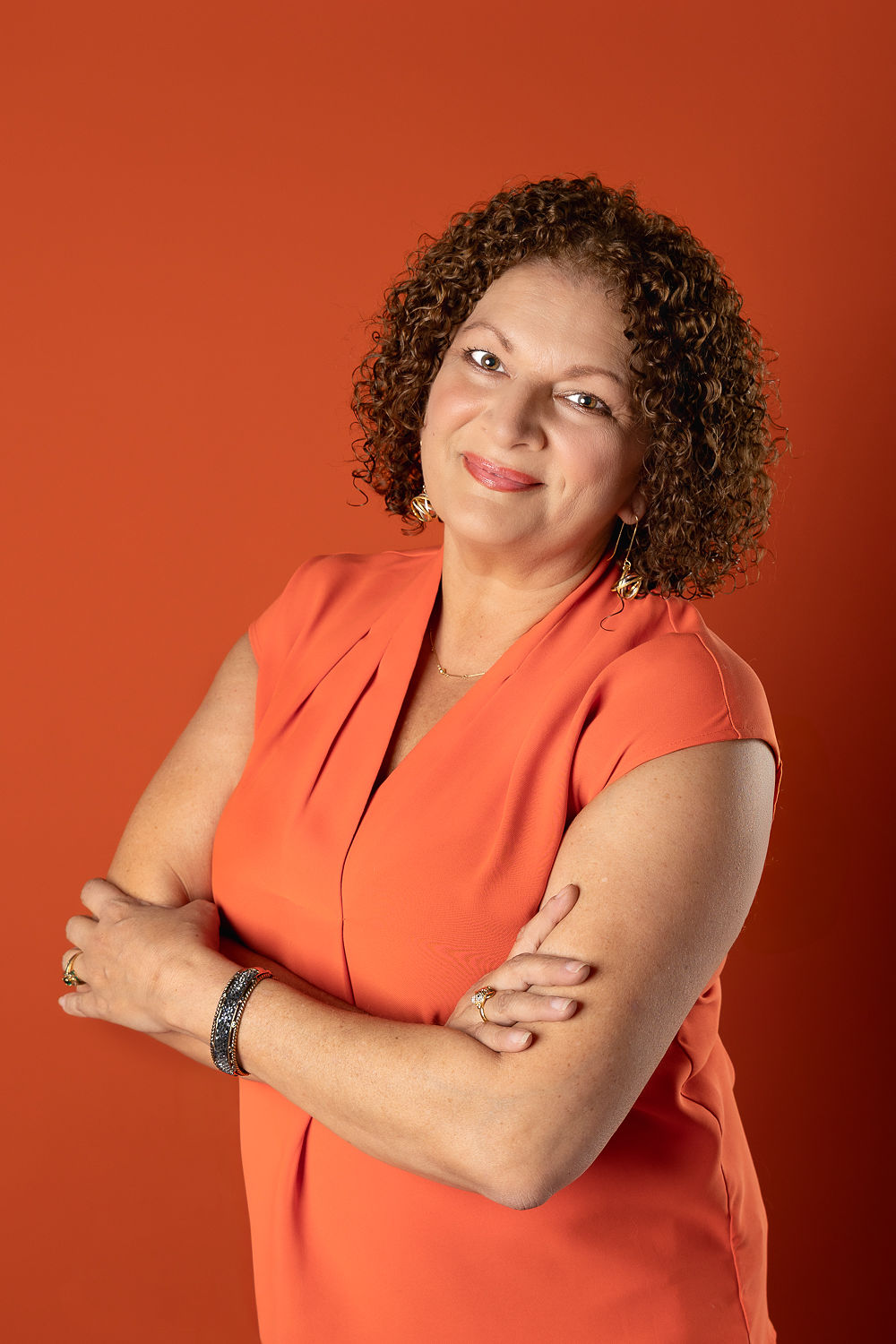
Metaphysical Trauma Researcher

Military to Metaphysics
I deployed as a soldier. I knew how to function. I knew how to push through pain, stress, uncertainty, and the kind of pressure military environments normalize.
What I did not know was that my nervous system was already roaring.
About four days after arriving, I started feeling things on my skin. Like how someone might describe a minor reaction to a new laundry detergent. At first I thought it was the feeling of prayer in the air or burning oil in the sky, because I was trying to find logic in something that didn't follow the rules of logic.
About a month later, I was on night patrol and slid down a hill and rolled my ankle. The medic wouldn't prescribe a no-run profile for PT so I still had to keep practicing for my PT tests. Then came Iraq. The flights. The gear. The physical strain. The injury to my knees jumping off the back landing of the C-130 with full battle rattle and CBRN gear.At the same time, something else was happening.
I was beginning to feel, hear, and know things I did not have language for yet. Sometimes it came as a clear knowing that something was wrong. Sometimes it was a warning not to leave someone alone. Sometimes it was a sense that a person was lying, that the room had shifted, or that a moment needed more attention than everyone else was giving it.
It was confusing, but it did not feel unsafe.
It felt oddly familiar.
Months into the deployment, I was walking back to Zone 6 in Camp Arifjan, Kuwait when I realized the guidance was somehow connected to my two childhood imaginary friends I had when I was three. My family had talked about them before. How I would sit and play with my friends. As I got older, and like many children, I was told I could not keep having imaginary friends. I had to grow up. I had to go to school. I had to live in the world everyone else agreed was real.
So they went away.
Or maybe I did.
During deployment, I was surrounded by thousands of people and still felt deeply alone. Not regular alone. Not “I miss home” alone. A deeper kind of alone. The kind where no one seems to see who you really are, and you cannot explain what is happening inside you without risking being misunderstood.
When that familiar guidance returned, it felt less like fear and more like reunion.
It was not always an auditory conversation. Most of the time, it was more intuitive than that. A knowing. A familiar presence. Information arriving through sensation before my mind had time to explain it.
It felt the way you can know the wind is warmer than your skin by how it touches your face. Like walking out of a department store in Las Vegas and feeling the sun hit you before you ever look at the temperature.
You do not have to see the heat. You do not have to measure it.
You just know.
The deployment was not only stressful because of the deployment environment. It was stressful because the culture and climate inside the unit did not feel safe either.
There were moments when the rules seemed to shift depending on who held the power. I was threatened with punishment for “jumping the chain of command” after sending a private email to my support operations command sergeant major, while the same leaders bypassed my own first-line leadership to pull me into a meeting.
The issue was not accountability. I understood accountability. I was a soldier.
The wound was hypocrisy.
It was being told the rules mattered while watching those same rules become optional for the people enforcing them. It was realizing that truth did not always protect you. Rank did not always mean wisdom. Leadership did not always mean care.
That kind of betrayal does something to the nervous system.
By the time I came home, I was angry. Shocked. Betrayed. Unsafe.
I did not come home whole. I came home with a nervous system that had learned to scan every room for danger, every sentence for distortion, every leader for the moment they might turn.
I came home utterly depleted. Physically injured. Mentally exhausted. Spiritually cracked open. Carrying things I still did not know how to name.
And I came home to a marriage that could not hold me.
While I was deployed, my husband had dissociated in his own way. He could spend forty-five minutes talking about himself, but when I tried to open up about what was happening to me, he suddenly had to go.
So even while I was overseas, surrounded by thousands of people and still deeply alone, I did not have a grounded place to land at home either.
The marriage did not break because of one moment. It broke because one moment told the truth about the whole pattern.
By our ten-year anniversary, I had spent a decade making room for his goals, his school, his career, his dreams, his wants, and his version of the future. But there was never room for me.
Something in me shattered.
One day, I was going up the stairs, got to the loft of our 2-story home and tripped over my fee. I fell onto my knees and couldn't get back up. There was nothing left in me to give. All I could do was sit there and cry. "God, please take this from me."
What I heard back: "We've been waiting for you to let go."
It's the story I share in my book.
That was when I knew I had to leave.
Not just the marriage. The house. The neighborhood. The friendships that no longer felt safe. The version of my life that had been built around enduring, absorbing, explaining, forgiving, and staying long past the point where my body knew I was done.
I packed everything that belonged to me while I was on crutches.
And I left.
That decision did not make life easier. It opened a new kind of pain. But underneath the grief, there was a knowing.
I was where I was supposed to be.
Sometimes healing does not begin when life becomes peaceful. Sometimes healing begins when you finally stop negotiating with what is destroying you.
After I left, I did not immediately become who I am now.
I felt crushed under the rubble of spite, betrayal, shock, hurt.
For two years, I could not work. The PTSD, the divorce, the physical injuries, the betrayal, the spiritual awakening, the spiteful ex-husband, the parental alienation, and the fracture of everything I thought my life was supposed to be became too much.
My abilities were getting louder. So was my PTSD.
That is the part people often miss. Awakening did not make me float above my pain. It made me more aware of what was happening inside it. It made me feel every bit of it.
So I started studying trauma because I had to figure it out. Otherwise, I would have broke me.
As I climbed, I learned.
I moved out of my brand new house while still on crutches. With nowhere to go and nothing to do, I watched TEDx videos, YouTube videos, weird shows that I felt prompted to watch. I studied Quantum Healing Hypnosis Technique (QHHT). I studied Emotion Code. I explored fringe healing modalities because some of them were touching truths that conventional spaces had not yet learned how to name.
But I also dove deeply into psychology, trauma research, the nervous system, anatomy, the body, and meridians.
I was not studying to sound impressive. I was studying because I needed a bridge to get me from here to there.
A way to understand what had happened to me. A way to explain what I was sensing in others. A way to translate the invisible into language people could actually use.
In this conversation, I share more of the lived story behind One Emprima, my military experience, trauma work, spiritual awakening, and the path that led me to this work. It is personal, honest, and a deeper look at the human behind the methods.
When I began studying Quantum Healing Hypnosis Technique in 2019, I expected to feel like a beginner. Instead, something else happened. As part of the training, I needed to complete fifty free practice sessions. These sessions were long, often three to four hours each. But as I moved through the training, I kept having the same feeling:
You already know this, Annie. You already know this.It was not arrogance. It was recognition of my claircognizants or clear-knowing. The material was new to my conscious mind, but not new to whatever part of me had been waking up since deployment. It felt like opening files that had already been pre-loaded into my operating system.
These were not certifications I collected. They were methods, tools in my metaphysical toolbox, that emerged through the work itself because clients needed places to go that existing language and existing tools could not fully reach. One by one, the modalities I use now unpacked through client sessions.
Today, I call myself a metaphysical trauma researcher because that is the closest language I have found for what I do.
I work with the mind, but I do not stop there.
I work with the nervous system, but I do not stop there either.
I hold the container for the body, the soul, the energy field, the meridians, the story, the survival patterns, the inherited wounds, the spiritual experiences, and the places in a person that have been too much, too strange, too painful, or too complex for smaller rooms.
My work is not traditional mental health care. It is not a replacement for medical or psychological support. It is a different kind of room. A much larger one.
A discovery session is your opportunity to interview me through your nervous system. Not just to ask what I do, but to feel how I hold space.
To feel what it is like when someone can step into your energy field without contaminating it, interpreting it through their own wounds, or carrying your pain home as proof that they cared.
I do not need to be overwhelmed by your story to honor it. I do not need to absorb your pain to help you move through it. And I do not need to make your trauma about me in order to sit beside it with you.
If your story has been too big for the rooms you have been bringing it into, you may not need a smaller story. You may need a bigger room.
Explore more interviews, conversations, and teachings from Annie Emprima and One Emprima.
Client Experiences
Every person experiences the EMPRIMA Methods™ differently. Read reflections from clients who have participated in private sessions, intuitive development work, and live demonstrations.